
Finding Hamilton County Residents
Hamilton County keeps no one public roll that confirms every present household. A property result may identify a parcel and its listed owner. A Register entry can identify the parties to an instrument. A library directory can place a person at a historical address in a stated year. The useful method is to build a short, dated trail instead of treating one match as a conclusion. Chattanooga, East Ridge, Signal Mountain, Soddy-Daisy, and unincorporated areas can also have different municipal custodians.
Start with the official record that accepts the information in hand. Save the exact spelling, date, and role displayed. When a result does not fit, use the keeper's counter, phone, email, public-record request, library reference desk, or archive assistance rather than guessing from a similar name.
- Normalize an address through USPS and retain the original form separately.
- Search the Assessor by street, parcel, or owner and note the situs and parcel identifier.
- Use any displayed Book/Page value in the Register of Deeds index.
- Check GIS for parcel, ZIP, municipal, and precinct context.
- For a dated question, ask Chattanooga Public Library or UTC for directories, maps, newspapers, or finding aids.
Note: A public owner, grantee, court party, or directory entry is a recorded role, not a confirmed current resident.
Hamilton County Resident Records Offices
The Hamilton County Register of Deeds, the Assessor of Property, and the Election Commission are separate custodians with different search limits. The Register keeps recorded instruments. The Assessor provides parcel and appraisal context. Elections handles registration and precinct matters. A street-by-street chain belongs on the Hamilton County street directory reference, where each address record is kept in its proper role.
Hamilton County Register of Deeds
625 Georgia Avenue, Room 400
Chattanooga, TN 37402
423-209-6560
Hamilton County Election Commission
700 River Terminal Road
Chattanooga, TN 37406
423-209-8683
Hamilton County Assessor Search Fields
The Assessor property search is a practical starting point for the Hamilton County residents directory when an address or parcel is known. Its four visible fields are optional. One complete field can run a search, while added fields narrow it. The result sequence observed for a street search includes the parcel or map identifier, situs address, owner label, year, appraised value, square footage, property type, sale date, sale price, and Book/Page. The roll supports property research, not a household claim.
| Field | Input and use |
|---|---|
| Street Name | Optional text; a street name or abbreviation is accepted. |
| Street Number | Optional text; enter the house number to narrow a street search. |
| Parcel | Optional text; examples include 139 001.01 and 129P B 010. |
| Owner | Optional text; the portal example uses Doe John. |
The Assessor search screen shows those four controls and examples. Its output should be recorded exactly as labeled, particularly where an owner, a situs address, and a mailing address may not be the same thing.
Note: Appraised value, a sale field, and a Book/Page reference describe separate record facts and should not be collapsed into one conclusion.
See the official Assessor search below before choosing a field.
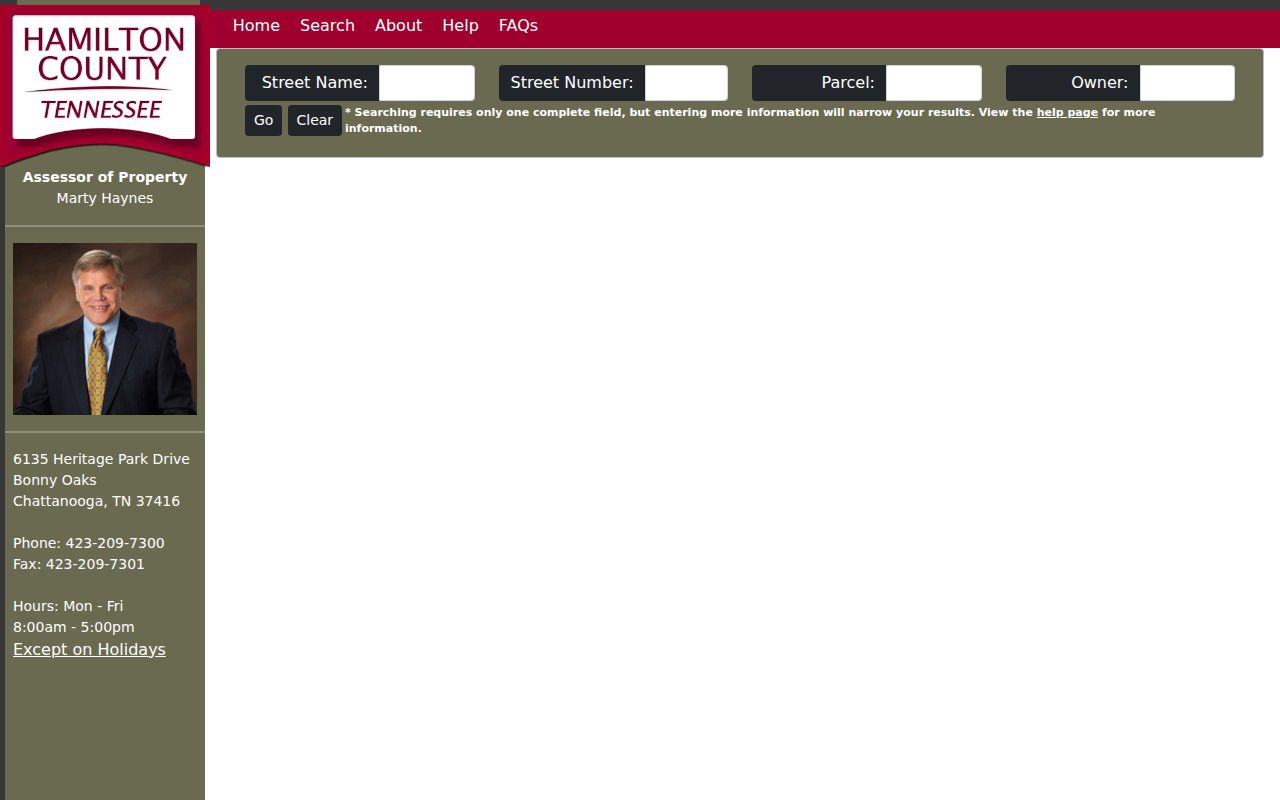
The four fields make the portal useful for a parcel-led or street-led record trail.
Hamilton County Book Page Bridge
Insider tip: An Assessor result can include a Book/Page value. That value is a bridge to the Register's Book & Page search, not a deed by itself. The Register's instructions also list Party, Document, Property, Party/Property, Index, and Quick Search. Search name variants with care because initials, married names, business names, estate names, and punctuation can index differently.
The Register's online service is read-only, prohibits automated extraction, and requires a $50 monthly account before a password is supplied. Ordinary copies are listed as free, while microfilm copies are $1 per page and may be emailed or faxed under the office process. For a defined item, its public-record request route offers inspection, copies, on-site pickup, USPS, electronic delivery, or another stated delivery method. Ask for a party, instrument number, Book/Page, date range, or specific document instead of a compiled report.
Hamilton County's June 30, 2025 ARPA report lists a $602,607 Register project to digitize 1,400 bound deed books dated 1796-1960. It is an important preservation and access bridge, but it does not prove that every book or image is searchable online today.
The Register welcome page describes the current account boundary and beta or classic search routes.
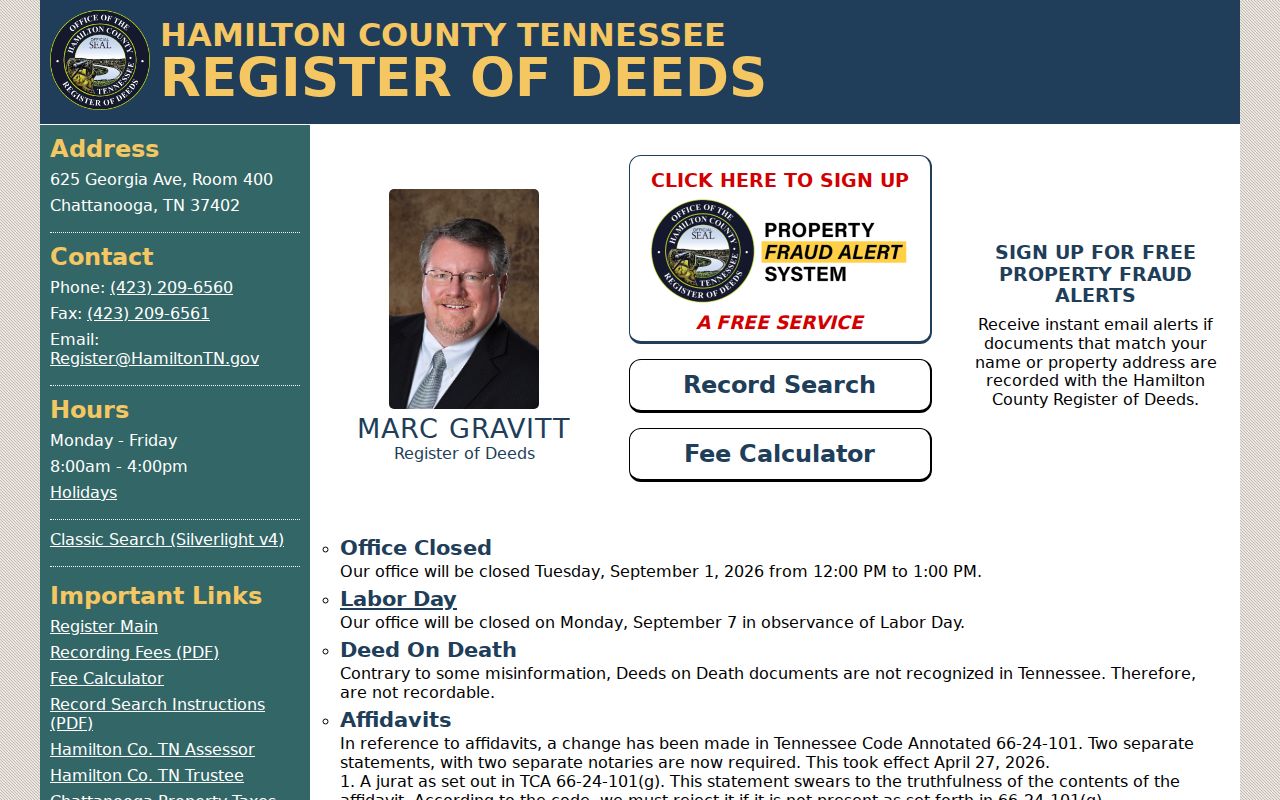
A recorded party can be a grantor, grantee, borrower, trustee, or signer, so retain the role that the document actually reports.
Current Hamilton County Resident Sources
Current Hamilton County resident sources are record-specific rather than a universal directory. The table separates what each source can show from what it cannot settle. Official custody and a visible date are more useful than an unsupported combined list.
| Current source | Recorded role or clue | Custodian | Access path |
|---|---|---|---|
| Assessor property roll | Parcel, situs, owner label, appraisal and sale context | Assessor | Free online field search |
| Register instrument index | Recorded parties, date, legal-document trail | Register of Deeds | Account search, office, or specific request |
| Voter lookup | Restricted identity match | Tennessee | County, name, birth month and year |
| Precinct breakdown | Address-to-precinct and polling geography | Election Commission | Address or precinct search |
| Neighborhood association page | Civic-group and district context | City of Chattanooga | Public association information |
Neighborhood associations are community contacts, not member or household rosters. The city reports more than 100 registered associations, and the 2025 grant announcement lists 35 active groups. That is useful civic context, not evidence about a person at an address.
Hamilton County Voter Lookup Limits
The Tennessee Voter Lookup is a constrained identity query. It requires county, first name, last name, birth month, and birth year, and it is not an address search. Hamilton is a county option. The page identified data as current on August 25, 2026, which is a freshness label rather than a promise of permanent accuracy.
The Election Commission's precinct breakdown can instead connect an address with precinct and polling-place geography, and can export its search results to CSV. A structured voter-list request has its own certification, permitted-use restriction, delivery process, and stated $42 fee. It is not an unrestricted residents directory. Never infer party registration or a current address from a name match.
Here is the state lookup interface, including the required identity controls.
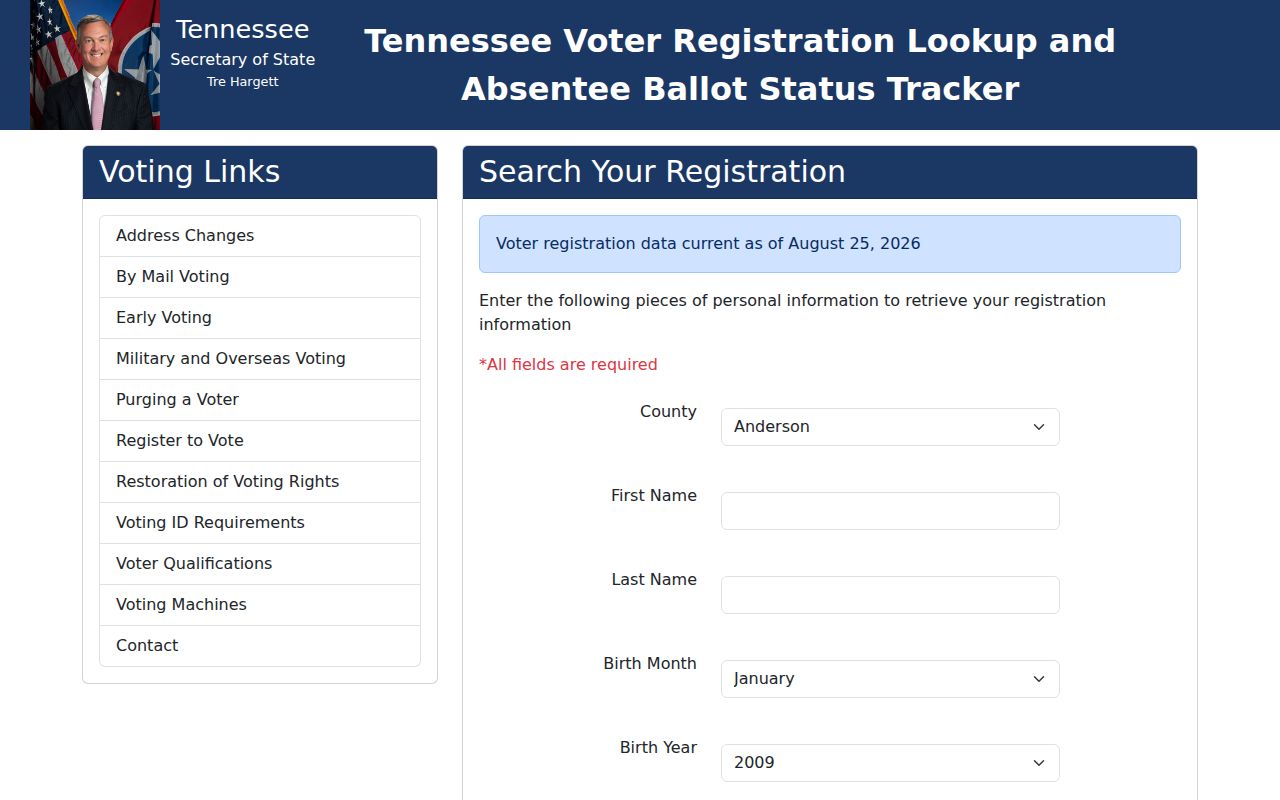
The required county and birth-period fields make clear why a street search needs the Assessor and GIS path instead.
Hamilton County Geography Layers
Parcel, ZIP, municipality, precinct, and neighborhood describe different Hamilton County boundaries. GIS adds parcel geometry, address points, streets, flood and zoning context, county or city limits, political boundaries, and map grids. It does not provide a legal survey or an occupant file. Its available-data description specifically excludes utility files. Some map layers update every two years or longer, so a current question may need confirmation from the responsible office.
The county has a documented addressing exception: GeoSpatial Technology assigns county addresses for E-911 except in the City of Soddy-Daisy. Postal standardization and municipal jurisdiction should likewise be checked separately. Myth: a USPS-standardized address does not confirm that a person or company is present there.
The county ZIP layer legend is useful for geographic context, as shown by the official service image.
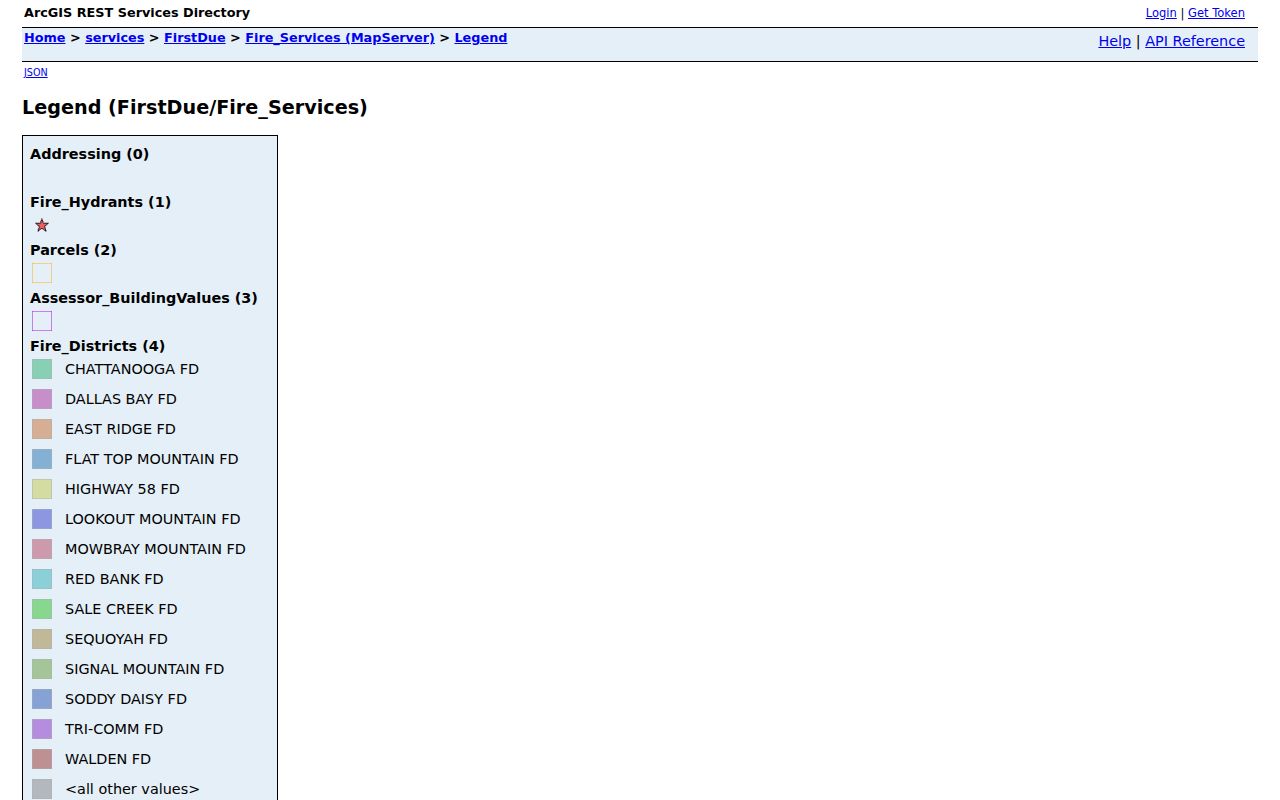
Use a parcel or exact-address result before treating a postal label as a municipal or neighborhood boundary.
Hamilton County Court Record Roles
Chattanooga City Court and Hamilton County courts are separate record systems. City Court provides search controls for last name, optional first name, citation number, docket number, date of birth, driver-license data, and similar-sounding names. The city records page is the appropriate route to the keeper, while county court routes include Tennessee Case Finder and the county criminal portal. A case result identifies a court record role, not a residence or identity conclusion.
See the Chattanooga City Court records instructions for the public search route and clerk information.
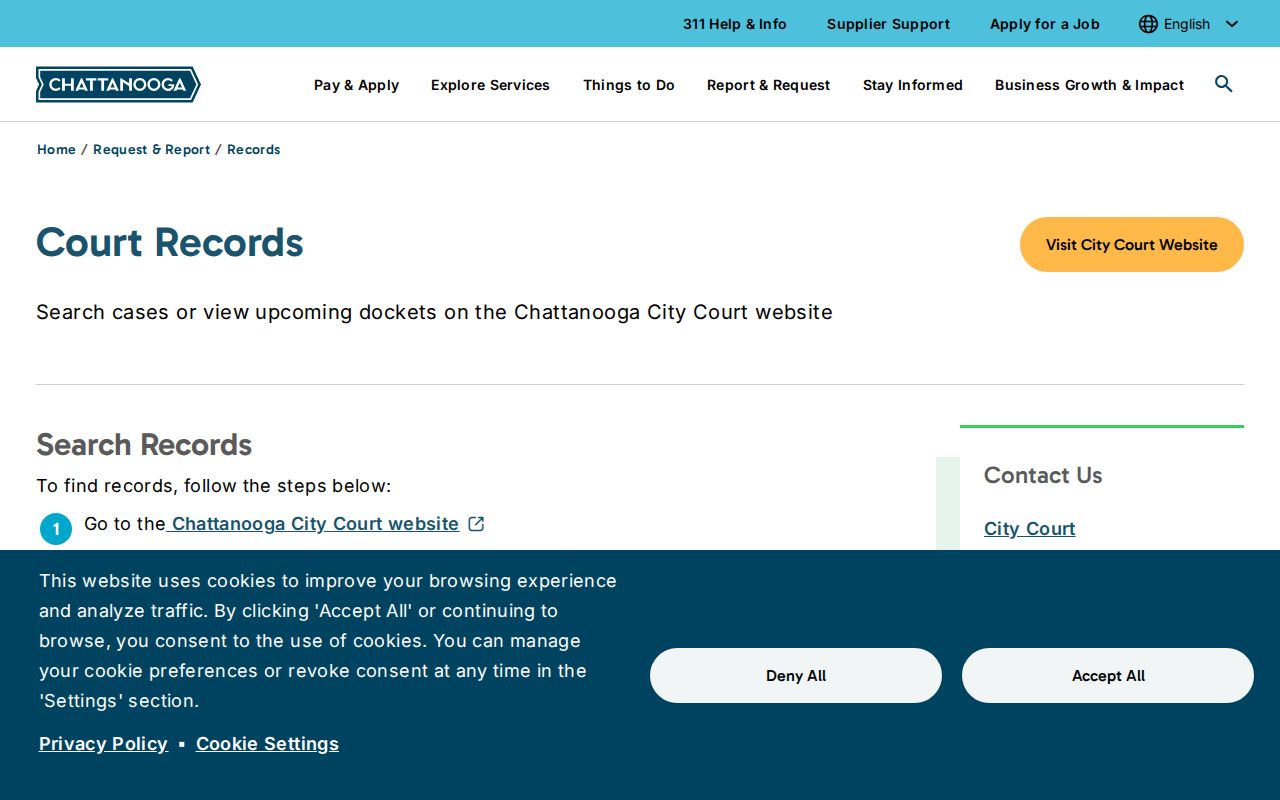
Use the clerk to verify the case, the named role, and any disposition rather than relying on a similar name.
Note: Court, property, and historical records should be kept as separate dated sources even when a name appears in more than one system.
Hamilton County Historical Resident Directories
Chattanooga Public Library holds city directories from 1871 through 2008, with gaps for 1873-75, 1877, and 1879. Many early issues are on microfilm. A dated directory entry can support historical presence, an address spelling, or a household notation in that volume. It does not establish a current address. For a full historical shelf treatment, use the Hamilton County city directories collection.
The library's Local History and Genealogy resources also include county records, maps, newspapers, an obituary index, Ancestry, HeritageQuest, and reference scans. CPL's obituary index begins in 1873 and continues to the present, with its data and custody transition to Chattanooga Open Data in 2025. Reference help and remote-copy options are useful when an item is noncirculating.
The Chattanooga Public Library Local History page shows the collection route.
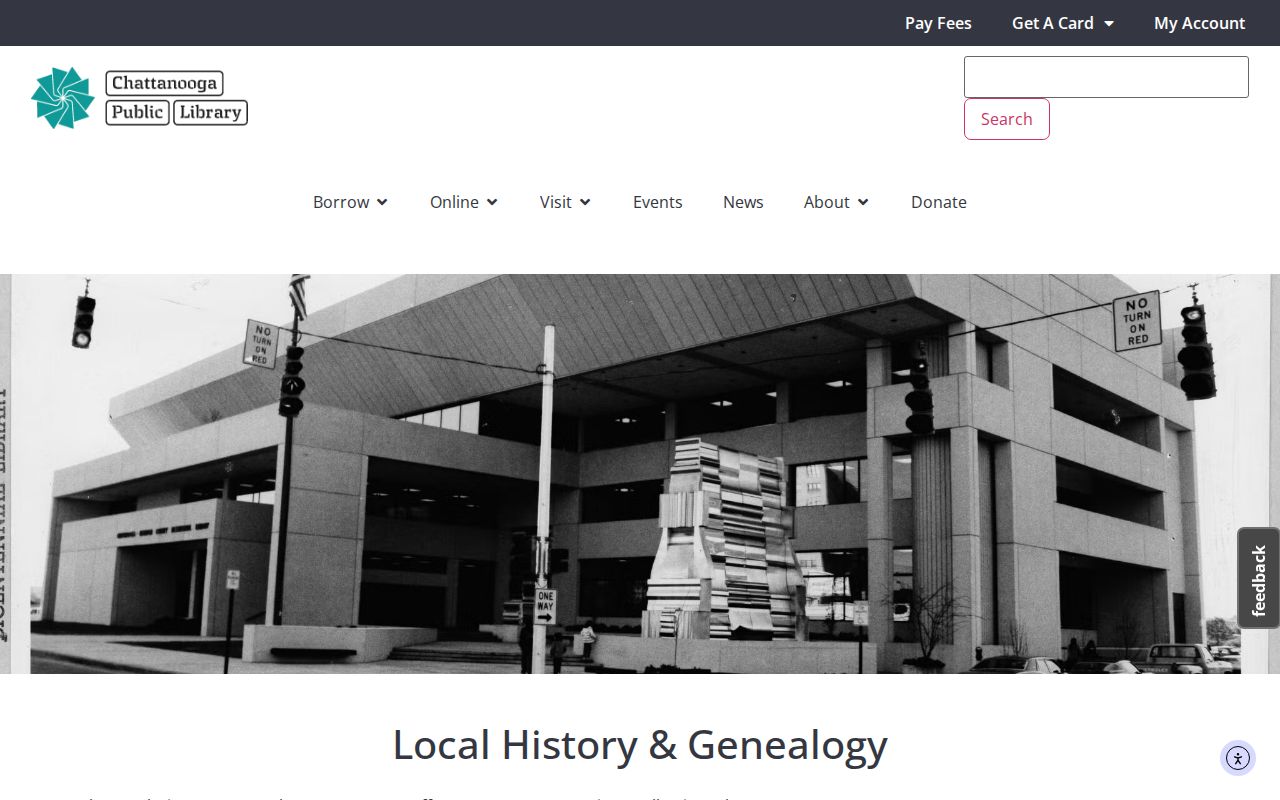
Library staff and catalog records can help identify a volume, microfilm reel, newspaper date, or map before a visit or copy request.
Hamilton County Municipal Custody
Hamilton County is not one municipal record keeper. Chattanooga is the county seat and largest municipality, but Collegedale, East Ridge, Lakesite, Lookout Mountain, Red Bank, Ridgeside, Signal Mountain, Soddy-Daisy, and Walden can hold their own court, planning, permit, code, or clerk records. The county map and election materials supply useful place context, yet the custodian still depends on the record type and jurisdiction. A Chattanooga city route should not be used automatically for an address in another municipality.
For a city matter, Chattanooga's central records route points to its open-records portal, citations and violations route, and municipal court search. City neighborhood-association pages provide district contacts and community names, not household lists. For a county matter, start with the Assessor, Register, Clerk, GIS, Election Commission, or court named for that record. When a portal does not show the needed fields, call or email the holding office before requesting copies.
Note: A municipal label, ZIP, precinct, or neighborhood name can help route a request, but none decides the records custodian by itself.
Hamilton County Source Dates
Every Hamilton County record should keep its source, date, role, and access limit. The Assessor portal is a current appraisal and tax source. GIS supplies current mapped interpretations that can update on a different schedule. The voter lookup displays a data date. A Register instrument identifies a recorded event, while a directory or obituary index identifies an historical publication or index date. A name appearing in several sources can still refer to different people or different times.
Use at least two independent matching signals before connecting records, such as a full name with a middle initial and a known address, or a name with a date and a parcel. That is a research check, not a claim of present occupancy. If dates, name variants, legal descriptions, or jurisdictions conflict, leave the connection unresolved and ask the relevant office, library, or archive for the underlying item.
State and county fallbacks matter when an online page moves or is incomplete. Tennessee Public Records Act requests, office inspection, phone and mail requests, library reference service, and archive assistance are documented channels. Keep a copy of the request and the response date so later readers can see what source was actually checked.
That simple record trail also makes later corrections possible: return to the named custodian, compare the source date, and amend the research notes without silently replacing one record with another.
Hamilton County Archive Migration
UTC Special Collections and CPL jointly steward former Chattanooga History Center material. Their PastPerfect Online support ended March 1, 2025. Current collection discovery now points to UTC finding aids and digital collections, so an old bookmark may no longer lead to an item. If a collection is not digitized, ask an archivist about access instead of assuming it is absent.
UTC collections include photographs, oral histories, family papers, business and civic materials, and local-history finding aids. Search by surname, place, organization, date, or collection name, then retain the collection identifier with the result. That supports a careful historical question without treating a collection mention as current-directory evidence.
The UTC finding-aid search is the current starting point for unscanned and described collections.
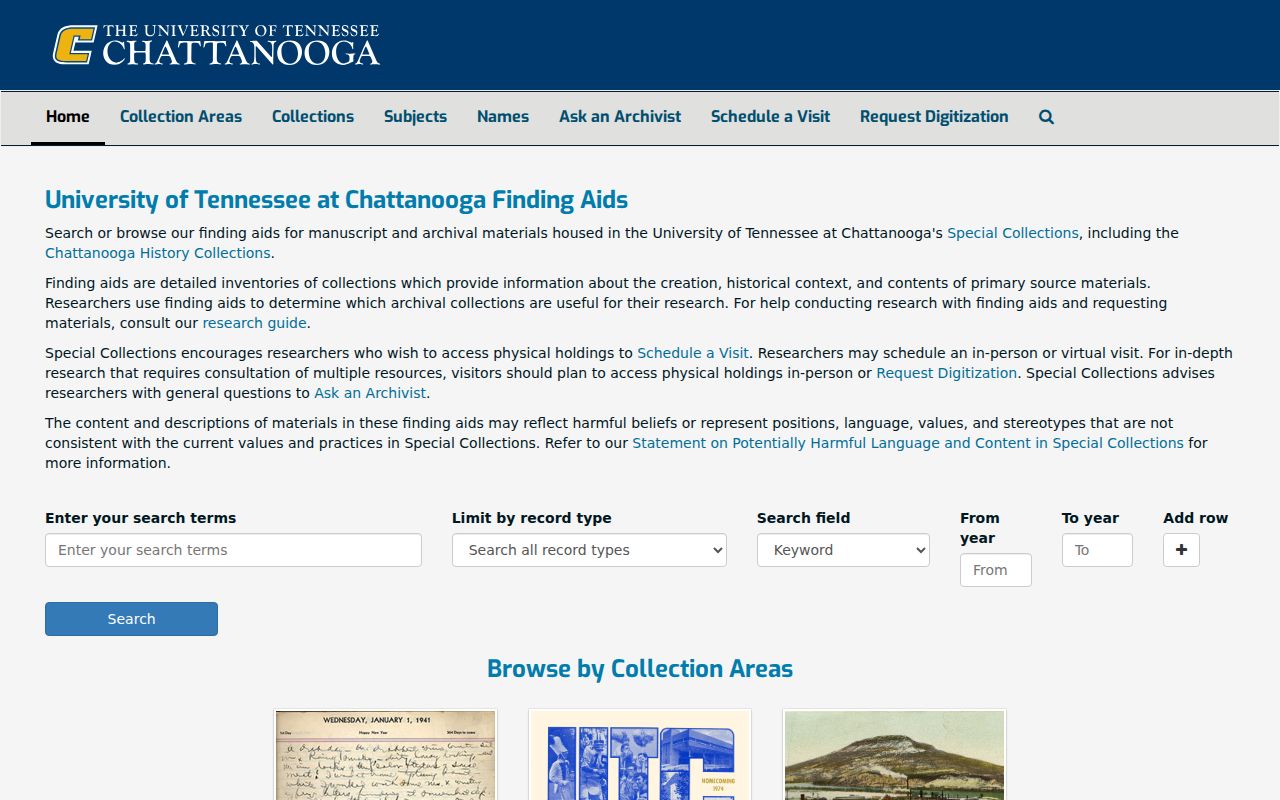
Finding aids identify what a collection contains and where it is held, while the underlying materials may still need an archivist request.
Hamilton County Record Terms
Short labels prevent a record role from being mistaken for a fact about a household. These terms recur across the Hamilton County residents directory sources.
- Parcel
- A property identifier used by the Assessor and GIS to connect mapped land with tax records.
- Situs address
- The mapped physical property location shown in the Assessor result; it can differ from a mailing address.
- Index
- A searchable listing that points to a record. It is not necessarily the document image.
- Criss-cross directory
- A historical reverse directory arranged to research addresses rather than only names.
When a term changes between a portal, preserve the portal's wording. A legal description, postal address, E-911 address, and situs can refer to related but nonidentical things.
Hamilton County Access Comparisons
Official sources can be slower or narrower than a combined people-search service, but they show custody, record type, and a route to verification. A name-only service without a source date can mix old addresses and unrelated people. Use official portals, office staff, and historical institutions for personal research, family history, estate questions, civic context, or checking a record about yourself.
| Research route | Strength | Limit to retain |
|---|---|---|
| Official custodian | Named record type, source, and correction route | May require a specific search, request, or visit |
| Library or archive | Dated local context and historical holdings | Material may be microfilm, onsite, or not digitized |
| Combined people-search category | May offer broad leads | Freshness and record provenance are uncertain |
Hamilton County Records Requests
The Tennessee Public Records Act, T.C.A. §§10-7-501 et seq., provides an inspection and copy framework for Tennessee citizens, subject to exemptions and office policies. A custodian generally need not create a new record, perform research, or turn records into a new compilation. The Comptroller guidance describes a prompt response or, within seven business days, access, a denial with legal basis, or an explanation of the time needed.
For a Register item, name the document, party, Book/Page, instrument number, or date range. Inspection is free under the Register policy, while copies can require an estimate and prepayment. If an online route is incomplete, use the office phone, email, mail, in-person inspection, or a specific request. A petition route exists under T.C.A. §10-7-505.