
Hamilton County City Directory Collections
Chattanooga material is the core of the Hamilton County historical-directory record. Chattanooga Public Library Local History & Genealogy (CPL) reports a run from 1871 through 2008. That long span is useful for a family, block, or business question, but it is not unbroken. The library specifically reports no issues for 1873 through 1875, 1877, and 1879. Pre-1938 volumes are on microfilm, while later access depends on the relevant volume and library service.
| Collection | Years | Where Held | Access |
|---|---|---|---|
| Chattanooga city directories | 1871-2008, with listed gaps | CPL Local History & Genealogy | Print or microfilm, with reference help |
| Hill City Directory | 1904 | CPL digital collection | Digitized item, verify page metadata |
| Ancestry directory service | 1871-1960 service coverage | All CPL branches | Free through library access |
| Chattanooga newspapers | Nineteenth century to present context | CPL microfilm and licensed tools | Library access and reference routes |
| UTC finding aids and digital collections | Collection-specific | UTC Special Collections | Online discovery plus archivist access |
Use the collection year as part of the citation. A Hamilton County directory line is a dated listing, not proof that a person was at the address before or after that edition.
Hamilton County Directory Research at CPL
CPL’s Local History & Genealogy department is at 1001 Broad Street in Chattanooga. It holds directories alongside county records, maps, newspapers, clippings, manuscripts, cemetery inscriptions, and church histories. Reference questions can go by email, phone, mail, or an in-person visit, and no appointment is required. Noncirculating material may be scanned or photocopied remotely for a fee quoted by the library. That makes the library a practical fallback when a needed Hamilton County historical volume is on microfilm or is not available in a web search.
The library also offers HeritageQuest and other research tools, while its newspaper resources include Chattanooga Times material from 1869 through 1963. Pair a directory year with a dated newspaper notice or map rather than filling a gap with an assumption. Fort Wood, St. Elmo, and Ferger Place are among the historic-place subjects represented in library clippings.
When requesting remote help, give CPL the volume year, the name or address as printed, and any page or neighborhood lead already known. A narrow question lets staff distinguish a microfilm check from a newspaper, map, or clipping request. The response may be a scan, photocopy, catalog direction, or an explanation that the material must be viewed in person. Keep that access method with the resulting Hamilton County citation so another researcher can find the same source.
Image source: Chattanooga Public Library Local History & Genealogy identifies the local-history access point.
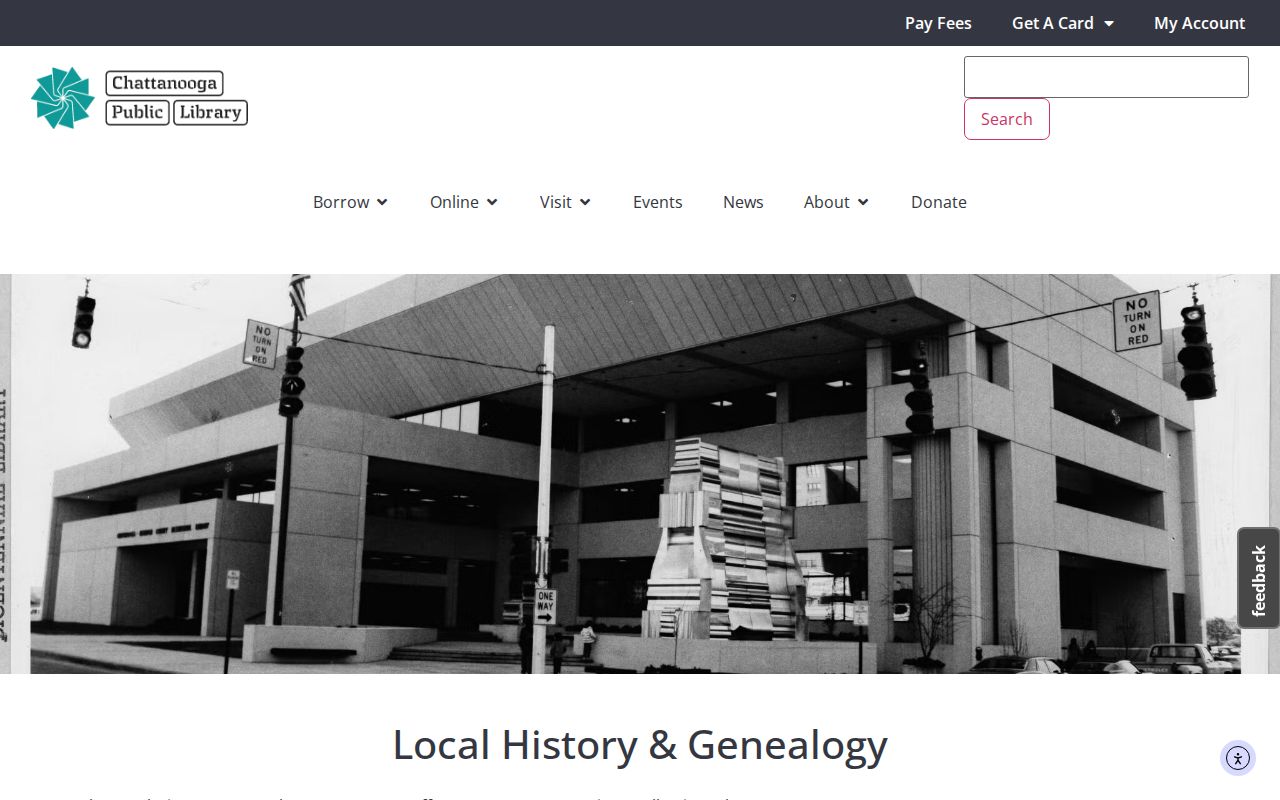
The library screen is an access starting point, not a guarantee that each Hamilton County directory volume is digitized.
Hamilton County's 1904 Hill Directory
The digitized 1904 Hill City Directory gives Hamilton County researchers a concrete historical entry point. It can be compared with a later volume, a period map, or a recorded property reference to see how a name or street appears at different moments. Verify the item’s page and image metadata before quoting an entry. The digital item is especially useful when the printed series alone feels too broad for a first search.
Use the 1904 item as a fixed point, not as a shortcut across decades. A later address can reflect development, an altered street form, or a different parcel arrangement. Compare the visible page with another dated source before connecting it to a later Hamilton County property record. That small check prevents a useful historical image from being stretched beyond what it shows.
Image source: the digitized 1904 Hill City Directory item preserves this specific Hamilton County-era directory anchor.
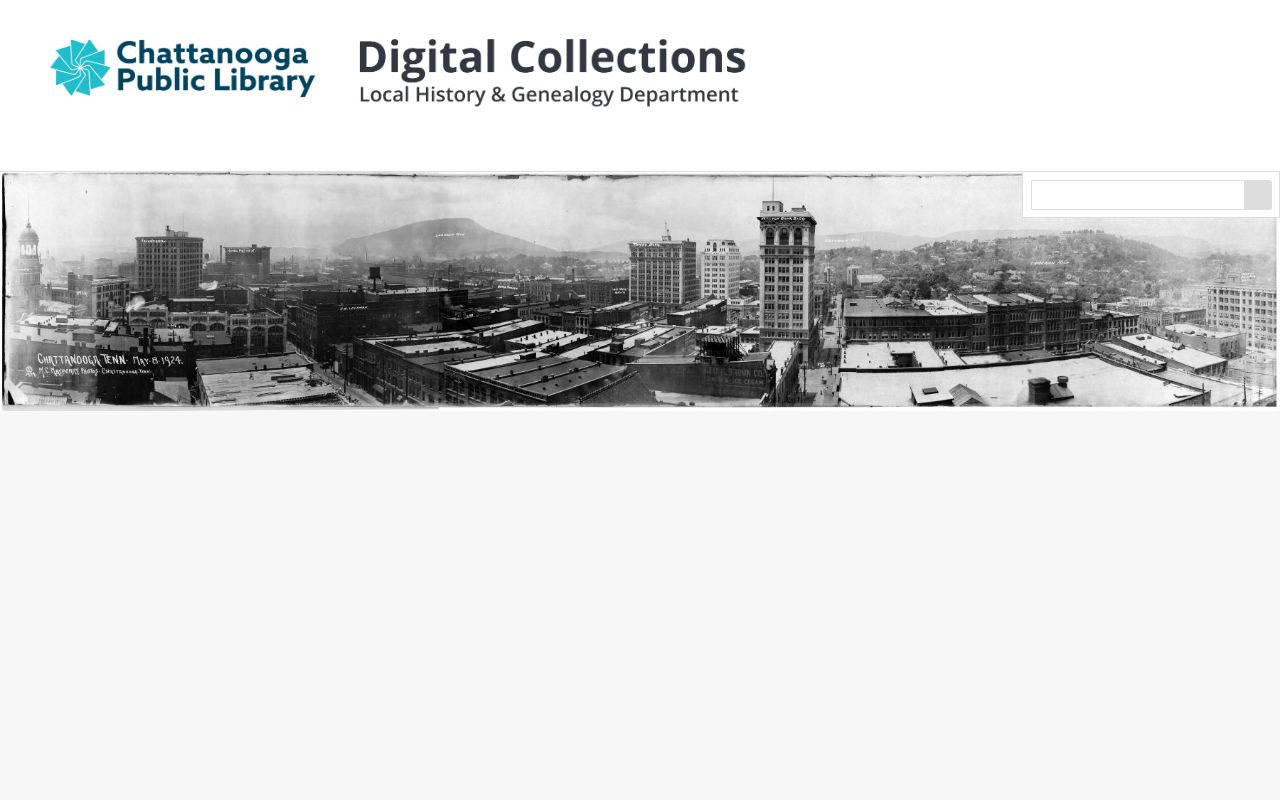
Use a page reference and the printed year with any note from this Hamilton County city directory image.
Reading Hamilton County Directory Entries
Read each entry exactly as the volume presents it. CPL’s house-history material confirms that editions can show a name, address, occupation, and household or status abbreviations, depending on the edition. The project research did not capture a representative entry or a verified abbreviation key. For that reason, record only fields visible on the page and photograph or transcribe the key from the same volume before expanding a shorthand mark.
| Year and page | Identifies the particular Hamilton County historical-volume evidence. |
|---|---|
| Name as printed | Preserve initials, spelling, and punctuation before normalizing a name. |
| Street address | A historical address form, which may differ from a later street label or number. |
| Occupation or status | Record it only when the edition visibly prints it. |
| Category or cross-reference | Note whether the line is a person, business, institution, boarder, widow notation, or another visible role. |
- Criss-cross directory
- An address-arranged directory that can be read by street. A separate Hamilton County run was not independently confirmed, so ask CPL rather than assuming one exists.
- Householder index
- An index organized around household heads when a publisher supplies it. Do not assume every Chattanooga volume includes one.
- Abbreviation key
- The volume’s own legend for shortened terms and marks. Its exact Hamilton County wording was not captured, so retain the page that explains it.
If a word or mark is unclear, preserve the uncertainty instead of silently expanding it. A page image, volume title, and nearby key are better evidence than a modern guess about a Hamilton County historical listing.
Hamilton County Archives at UTC
UTC Special Collections and CPL jointly steward former Chattanooga History Center material. UTC collections can add family papers, photographs, oral histories, postcards, business records, or civic material to a Hamilton County directory finding. They provide context for a surname, institution, neighborhood, or address in an era. They do not replace the dated directory line or identify a modern household.
Collection names such as Andrews Family papers, Brock Candy photographs, Fire Department records, Chattanooga Civil Rights photographs, and Wheland Foundry or US Pipe material can be useful historical leads. Search the collection first, preserve its identifier, and then ask the archivist about items that were not digitized. A collection association can support context, not a claim that every similarly named person appears in the Hamilton County historical record.
Image source: UTC Special Collections provides the archival research route.
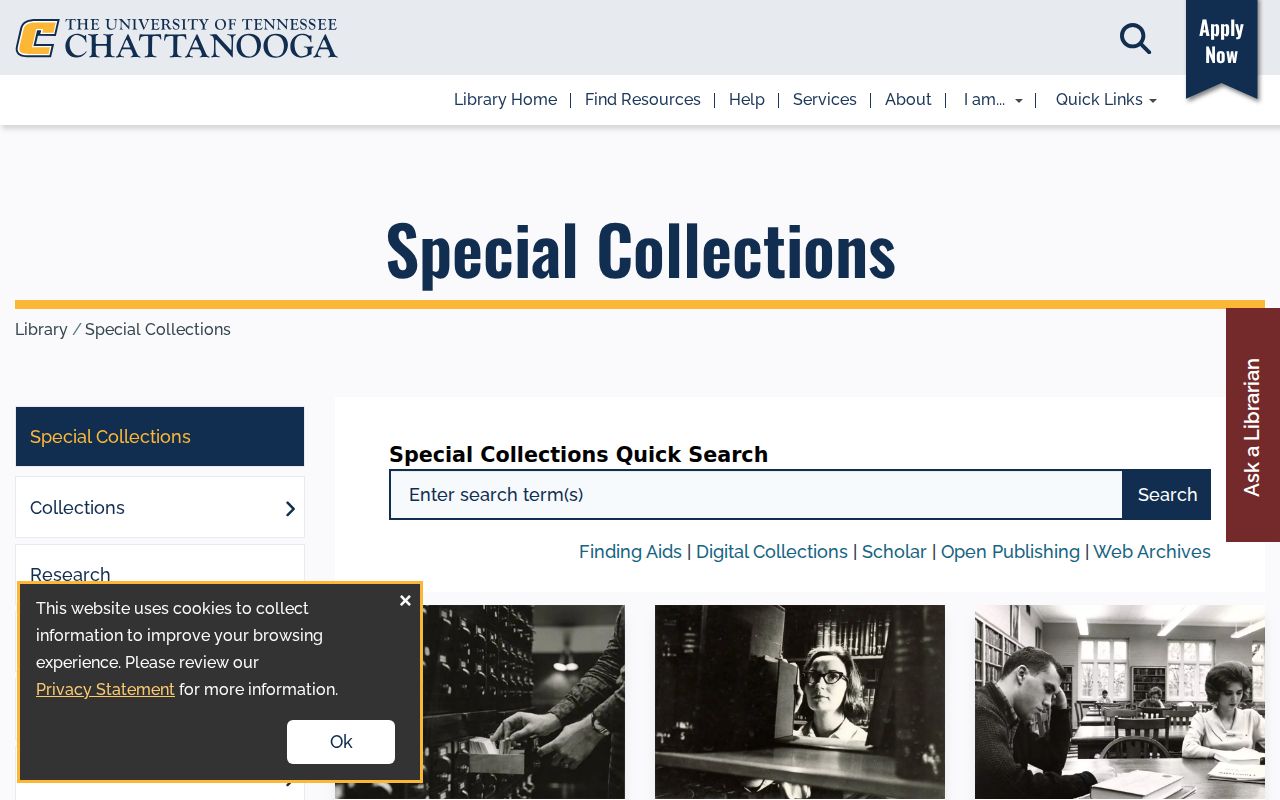
Hamilton County historical-directory work is stronger when the archive collection name, date, and relationship to the volume are kept in the research note.
Hamilton County Finding Aids
PastPerfect Online support ended at CPL and UTC on March 1, 2025. Current discovery routes are UTC Finding Aids and UTC’s digital collections. The finding-aid search allows terms, an operator, record-type limits, search fields, and From and To years. A result may lead to a scheduled visit, virtual visit, digitization request, or archivist question because much of the material is not online.
Image source: UTC Finding Aids shows the current collection-discovery route.
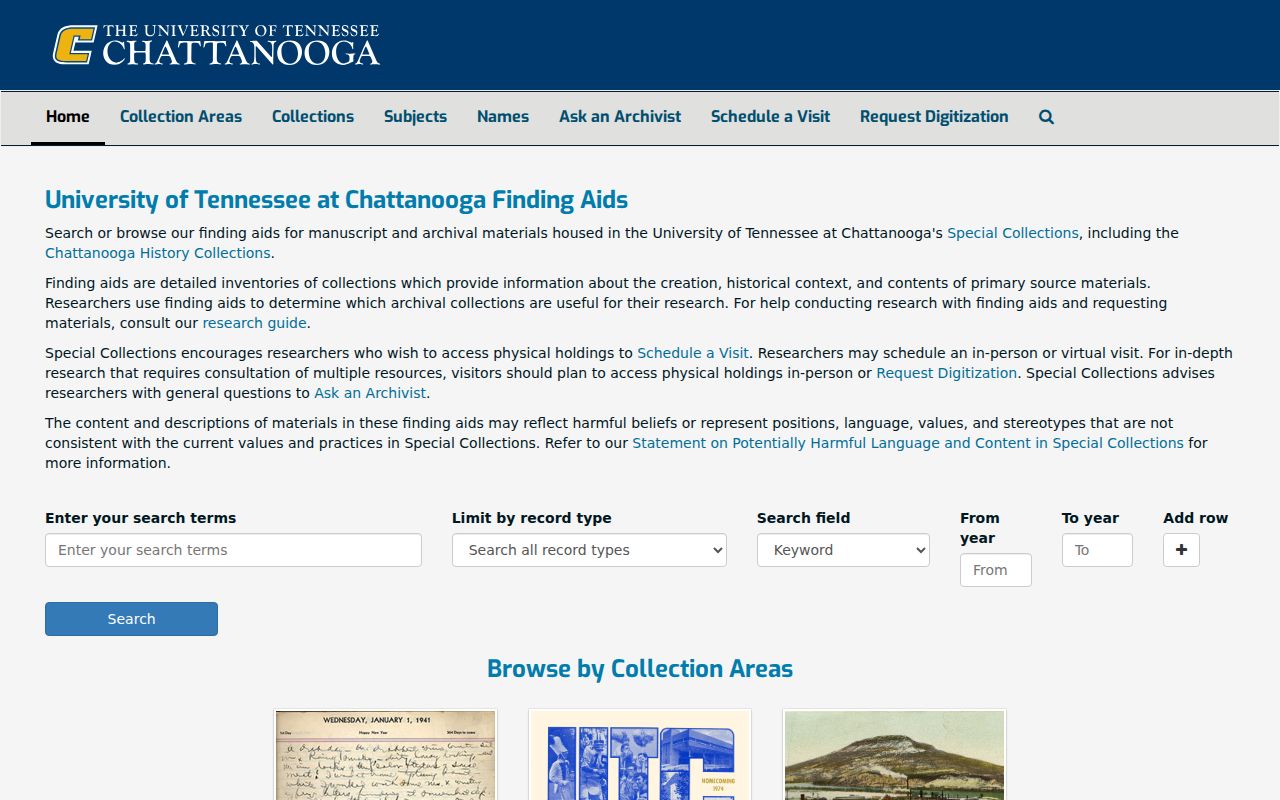
Search results can identify an archival lead, but the finding aid and any digital object should be cited separately from a Hamilton County historical-directory entry.
Hamilton County Historical Index Limits
The CPL obituary index reaches from 1873 to the present, but it is an index rather than obituary text. Its entries identify a person, publication date, and newspaper. CPL reported a 2025 migration toward the Chattanooga Open Data Portal, and the older page was suspended during the research inspection. Request a copy or consult microfilm when the date and newspaper support the question.
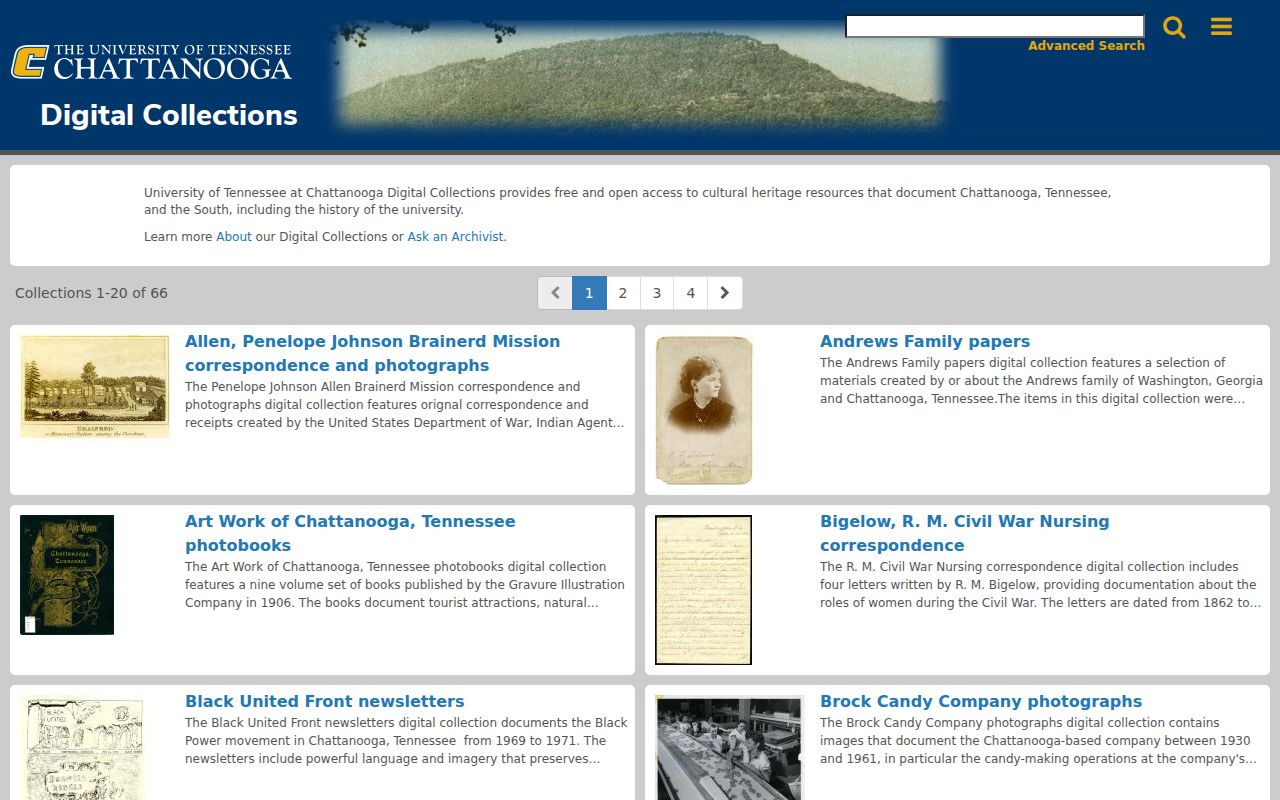
Image source: UTC Digital Collections is another current route for collection-specific historical material.
An index hit can point to a source, but a Hamilton County obituary index does not supply the full notice or establish a person’s address.
Trace Hamilton County Directory History
For family history, work from a verified name or address and move through selected Hamilton County directory years. Build a short sequence instead of trying to read every volume at once. A move, a changed spelling, or a vanished entry needs a second record before it becomes a conclusion. The historical collections are valuable precisely because they preserve dated clues that can be compared.
- Choose the first directory year where the person, address, or business is visibly listed.
- Record the spelling, page, address, category, and any visible status notation from that Hamilton County edition.
- Check an earlier and a later directory, allowing for the documented missing years rather than inventing a continuous run.
- Pair the chosen directory period with available census material through CPL’s historical research tools, then compare names, place, and date carefully.
- Use a newspaper, obituary index, deed, map, or UTC collection to test a move, death, street change, or same-name question.
A dated directory entry may show historical presence at an address. It does not prove an uninterrupted household, ownership, or a current residence. When a historical finding needs a current-source check, use the separate Hamilton County resident lookup path rather than extending an old listing forward.
Hamilton County Directory Timeline
These milestones help sort the Hamilton County historical-directory shelf without pretending that every year is equally available or searchable.
- 1871: CPL’s reported Chattanooga city-directory run begins.
- 1873-1875, 1877, and 1879: CPL reports missing issues.
- 1904: The Hill City Directory is a named digitized CPL item.
- Before 1938: CPL says the issues are on microfilm.
- 2008: CPL’s reported directory run ends.
Catalog clues name Connelly Directory Company, G. M. Connelly, Connelly & Fais, Norwood, Kline & Co., and Rothberger. They also suggest Rothberger years including 1880, 1891, 1895/96, 1899/1900, 1900/01, 1903-05, 1907-10, 1912, 1913, 1915, 1917, 1920, 1922-1964, and 1967-2008. These are shelf-finding clues only. The research did not verify every publisher and year against CPL call numbers, so confirm the catalog and volume title before citing one.
Note: Record the holding institution, original spelling, date, source role, and access limit with every Hamilton County historical result.