
Hamilton County Previous Resident Sources
One Hamilton County address can leave records in several places, yet no one source reports every past household. Start with the time period and the kind of proof needed. A deed follows recorded property parties. A directory can place a named person or business at a historical address. An obituary index points to a dated notice. Keep those roles separate. The strongest result is a trail with a source, date, role, and an access limit beside every fact.
| Source | Years It Covers | Where Held | What It Shows |
|---|---|---|---|
| Assessor property search | Current portal; historical retention not stated | Hamilton County Assessor | Parcel, situs, owner label, sale fields, and book/page bridge |
| Register bound deed books | 1796-1960 digitization project | Register of Deeds | Recorded-party, instrument, legal-description, and book/page trail |
| Chattanooga city directories | 1871-2008, with listed gaps | CPL Local History | Dated name-and-address or visible status listing |
| CPL obituary index | 1873-present | CPL and its 2025 data transition | Person name, publication date, and newspaper, not full text |
| Maps, papers, and oral histories | Collection-specific | CPL and UTC | Place context and dated historical leads |
For a twentieth-century household question, begin with a known address-year pair and work outward. For an older parcel question, begin with the legal description and recorded instrument trail. A modern sale field is not evidence of past occupancy.
Hamilton County Address Records Ladder
The Hamilton County Assessor search is a practical modern starting point because it accepts Street Name, Street Number, Parcel, or Owner. One complete field can be enough, and extra fields narrow the result. The observed result sequence includes a parcel or map identifier, situs address, owner label, year, appraised value, size, property type, sale date, sale price, and book/page. Copy the shown labels exactly.
An Assessor sales line or book/page reference establishes a property-record clue. It does not establish who occupied the place. The Register supplies the recorded-instrument trail, and GIS supplies spatial context, but neither becomes an occupancy record by being read together. Start by saving the parcel, situs, book/page, and research date before following a deed backward.
Image source: Hamilton County Assessor search displays the address-oriented property search controls.
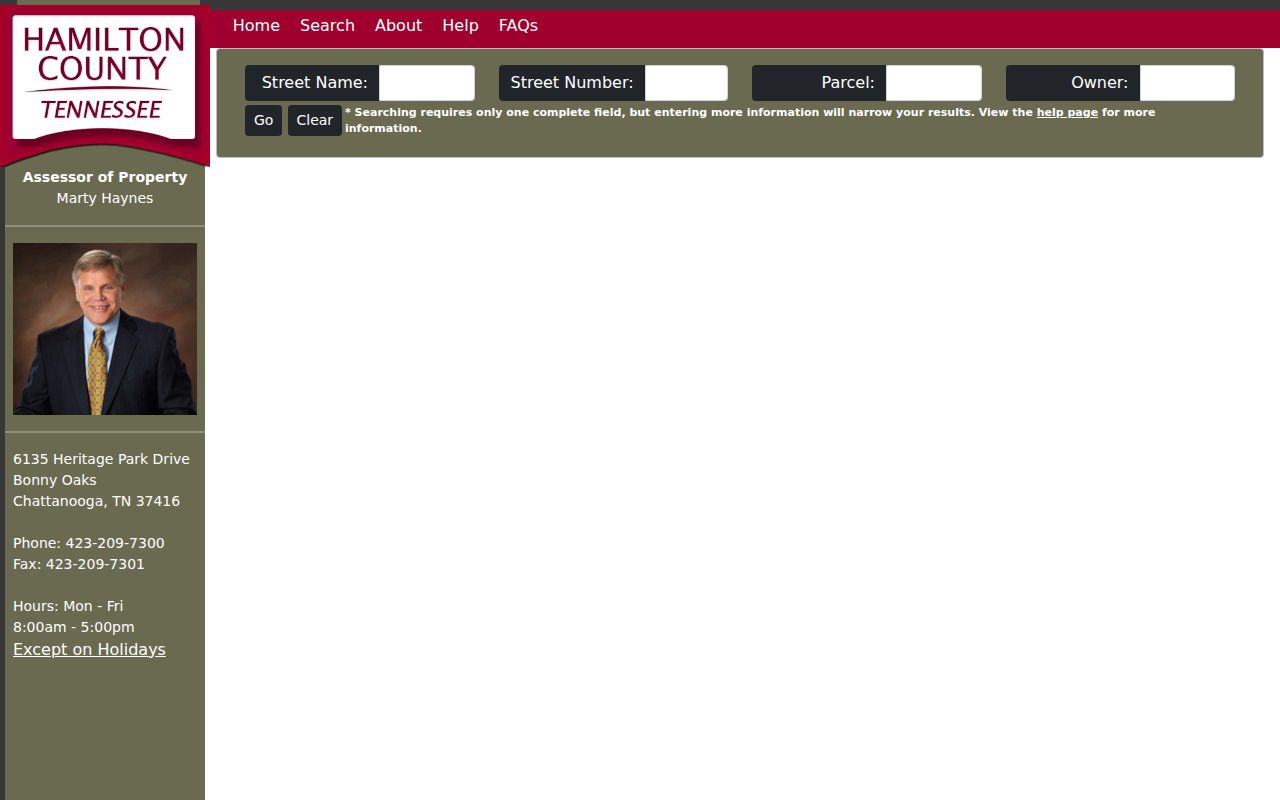
The Assessor interface can connect an address to a parcel record, while the dated sources below are needed for a careful past-residents trail.
Hamilton County Deed Records Backtracking
The deed chain begins with today’s parcel only as a bridge to older records. The Register search instructions list Party, Book & Page, Document, Property, Party/Property, Index, and Quick Search modes. Follow the legal description and prior instrument references, not the street label alone. A parcel split, subdivision, annexation, changed number, or altered street name can break an apparent address match.
- Normalize the address as written, including number, direction, street suffix, municipality, ZIP, and the date of the source being checked.
- Use the Assessor result to record the current parcel, situs, and any displayed book/page reference without calling it a title or occupancy result.
- Search that book/page in the Register, then save the instrument date, grantor, grantee, legal description, and any prior-reference clue.
- For the prior transfer, search the seller from the later deed as a grantee and compare the legal description before linking the records.
- Repeat backward one instrument at a time, noting each name variation, parcel change, and gap rather than forcing a continuous chain.
- When online access or a volume is unavailable, request the specific book/page or inspect the permitted microfilm or bound record through the Register.
- Grantor and grantee
- The grantor conveys an interest in a recorded instrument. The grantee receives that stated interest. Both are recorded-party roles, not resident labels.
- Chain of title
- A sequence of recorded conveyances associated with the same property description. This research sequence is not a legal title opinion.
- Legal description
- The lot, block, subdivision, metes-and-bounds, or other recorded property description. It often stays more useful than an old street label.
Hamilton County Register Records Limits
The Register online-records welcome page describes a read-only system with Party, Document, Property, and Quick Search options. It requires a $50 monthly access fee before a password is provided. The exact current online date cutoff was not located in the project research, so do not assume a particular historical book or image is searchable. The office at 625 Georgia Avenue remains the direct records route when a dated instrument needs verification.
The Register says microfilm copies are $1 per page and can be emailed or faxed under its stated process. A specific public-records request can ask for inspection or copies, with on-site, USPS, electronic, or other delivery choices. Inspection is free; other copying follows county policy. Identify the party, book/page, instrument number, or date range. The custodian does not create a new report or provide a legal conclusion.
Image source: Hamilton County Register of Deeds identifies the office that holds recorded-instrument records.
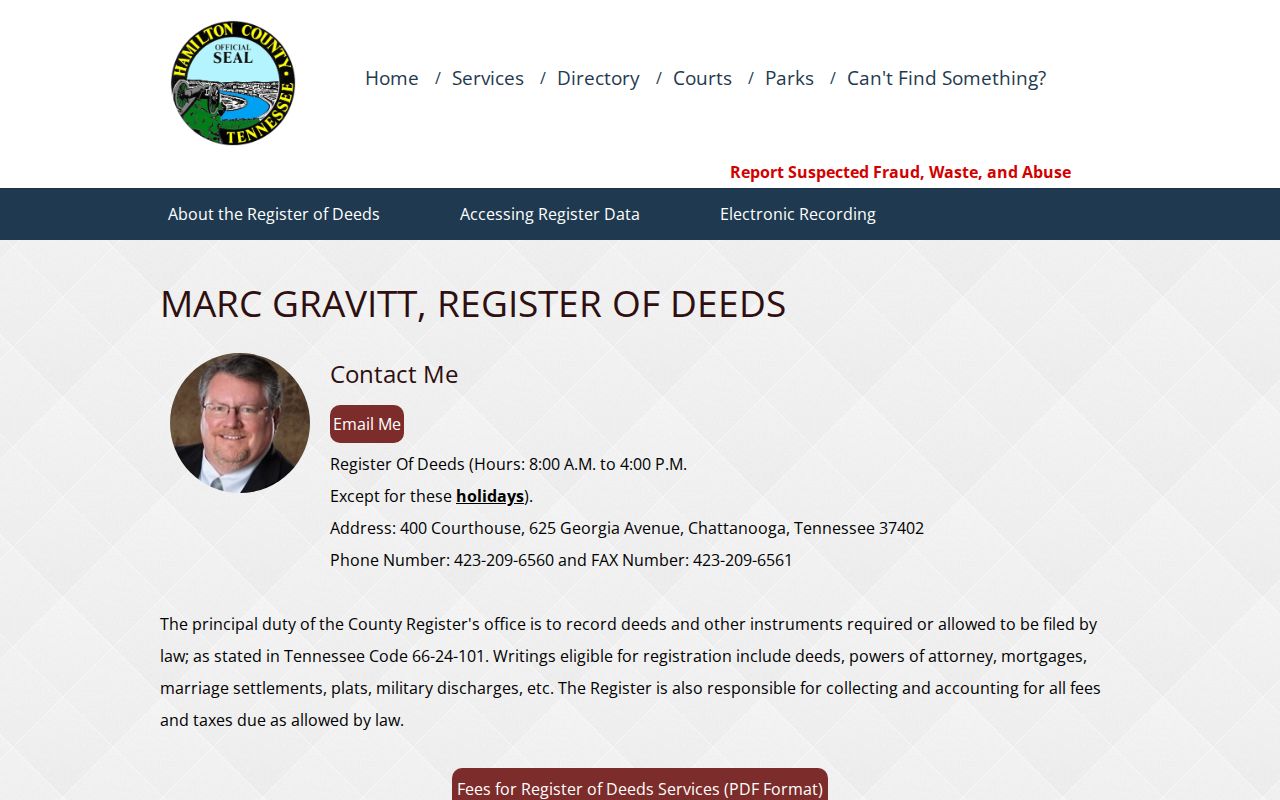
The office route is the fallback when a needed Hamilton County deed record is not visible through online access.
Image source: the Register’s login-protected deed-index route illustrates that account access is part of the historical search boundary.
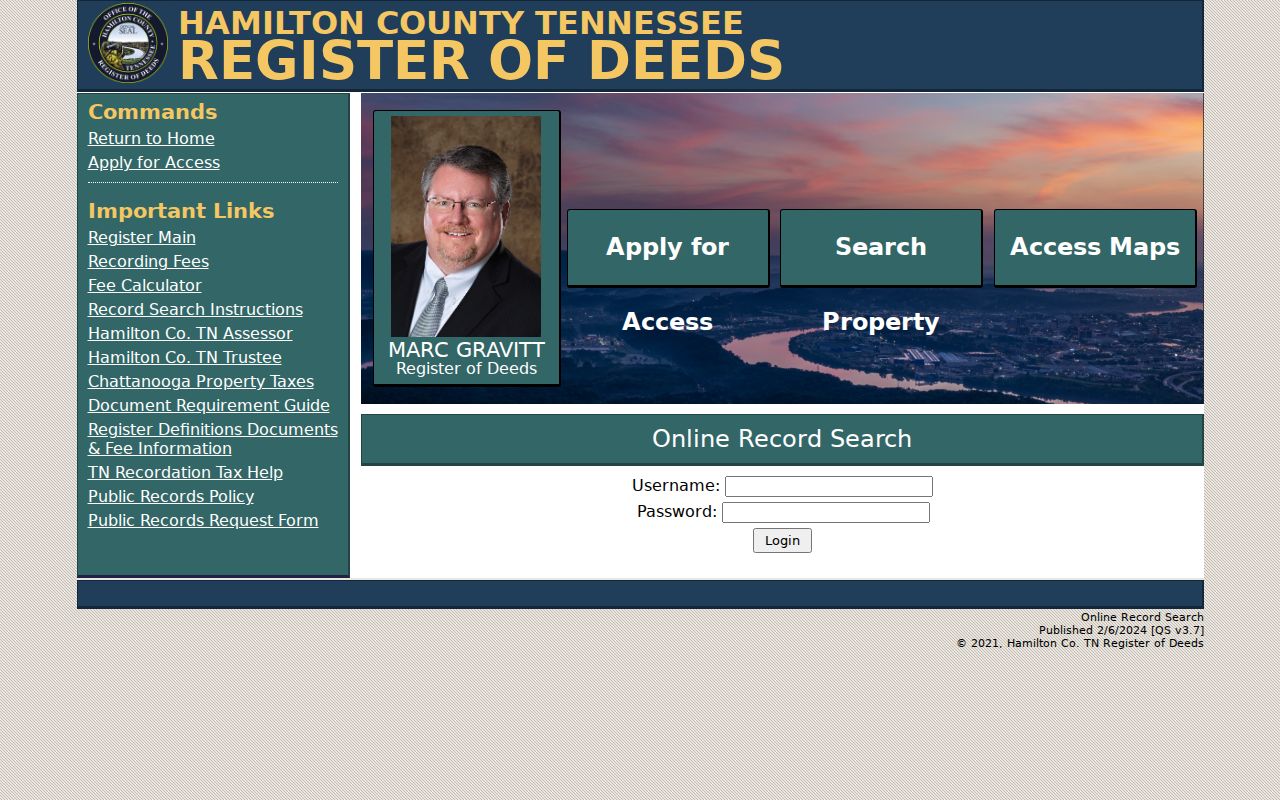
A login screen is not a searchable deed result, and it does not prove that every Hamilton County book has been digitized.
Hamilton County Deed-Record Digitization
Hamilton County’s June 30, 2025 ARPA performance report lists $602,607 for Register project G5, which targets digitization of 1,400 bound deed books dated 1796 through 1960. That is a meaningful historical bridge for a past-residents question. It is not proof that every book, page, or image is searchable online today. Check the current Register route, then use office or request channels for an exact volume.
The Register’s property alert is also not a deed-history tool. It is a voluntary future-index notification, not retroactive, not a title search, and not legal advice. Alternate spellings must be enrolled separately. It can help a person monitor later indexing, but it cannot recreate an earlier conveyance trail.
Hamilton County Past-Resident Maps
CPL’s house-history resources, Sanborn maps, plat maps, newspapers, and the county’s mapped parcel context can test whether an address form changed over time. Compare a period map with the deed’s legal description and a directory’s printed address. The project research did not capture an official Hamilton County street-renumbering or annexation bridge. When the number, street, parcel, or jurisdiction changes, flag that break and seek a dated map or directory instead of assuming continuity.
Image source: CPL’s house-history and directory guide describes local historical research materials.
The guide supports comparing dated directories and maps, while preserving uncertainty when an old address form does not match the modern one.
Image source: Hamilton County parcel and address map service provides spatial reference for the parcel layer.
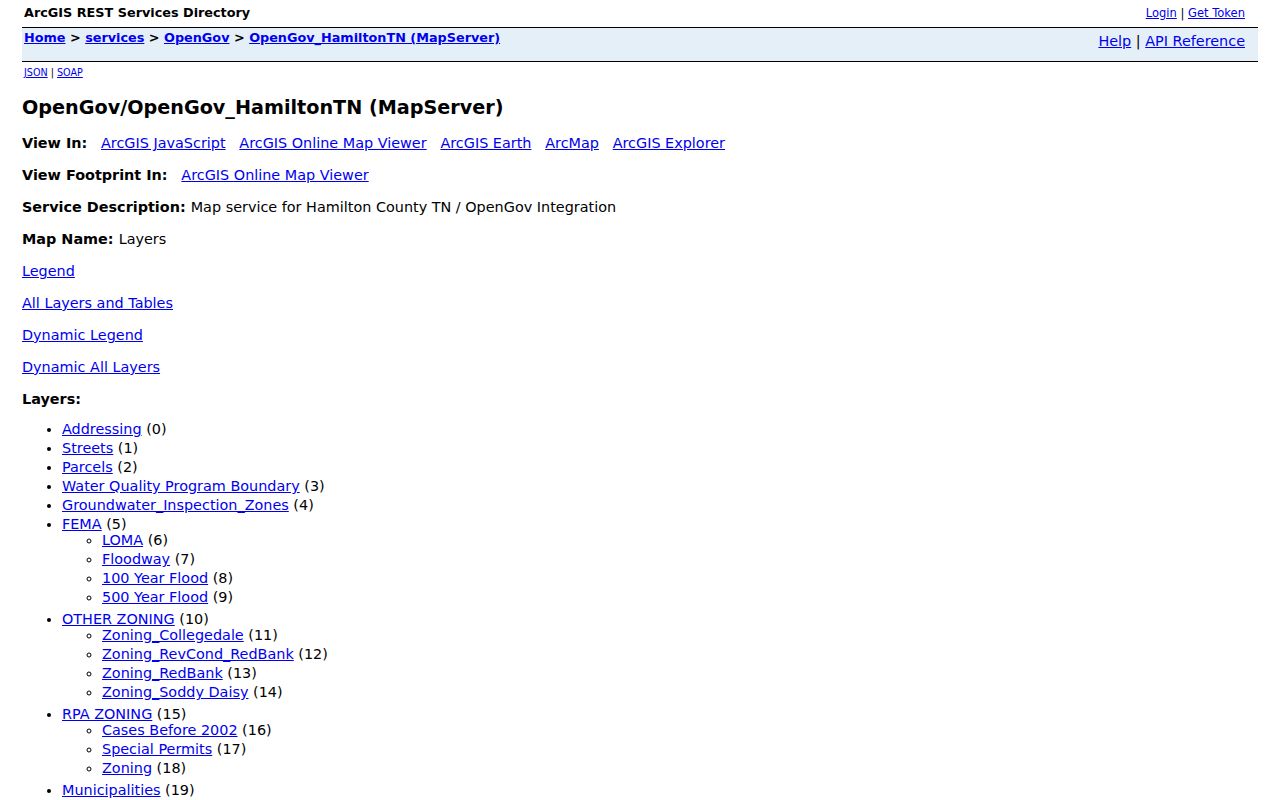
Map geometry can help place an address in context, but GIS data is not a survey and does not identify who lived at a parcel.
Hamilton County Previous Residents in Directories
Chattanooga Public Library reports city directories from 1871 through 2008, with no issues located for 1873 through 1875, 1877, or 1879. Pre-1938 editions are on microfilm. Those gaps matter. A missing name in one of the unheld years is not evidence that a person left an address. Use the years on either side, a period newspaper, a map, or a recorded instrument to test the interval.
The directories can support a historical address presence, an apparent move, or a visible status notation in a specified year. They do not turn a deed owner into an occupant, and they do not show a continuous household simply because two years match. The collection details and reading conventions are available in the Hamilton County city directories collection.
Hamilton County Past Household Records
Directories, census materials, and obituaries can add a household layer to the deed trail, but they answer different questions. CPL provides historical research tools such as Ancestry U.S. City Directories and HeritageQuest. The project research did not capture a schedule-by-schedule census coverage statement for Hamilton County, so confirm access and the original record before relying on a census result. The same-name problem is common, especially when a street or number has changed.
A cautious household flow is: directory year and page, then the address as printed, then available census material for a comparable historical period, then a map, newspaper, or obituary index to test the time and place. Treat each stop as a dated clue. Do not infer a current address or an uninterrupted household from this sequence.
- Select a directory year with a clearly printed name or address.
- Save its year, page, spelling, address form, and the kind of listing.
- Check accessible census material for comparable names, place, and period, then record the source separately.
- Use a dated map or newspaper to test whether the street form or neighborhood changed.
- Consult an obituary index, cemetery source, marriage route, or UTC collection only for the historical question it can support.
Hamilton County Archive Records Trail
The CPL obituary index spans 1873 to the present, but it records a name, publication date, and newspaper rather than the full notice. During the research review, CPL reported a 2025 transition toward the Chattanooga Open Data Portal and the old index page was suspended. Copies may be ordered for a fee, and microfilm remains an on-site or alternate-source option. A dated index record is a lead, not the underlying obituary.
CPL accepts local-history questions by email, phone, mail, or in person, and may scan or photocopy noncirculating material remotely for a fee it quotes. Give the staff a narrow Hamilton County year, address, name, or page lead. That fallback is useful when a directory, map, or newspaper image is not available through an online collection.
UTC Chattanooga History Collections can add family papers, photographs, oral histories, and civic or industrial context. PastPerfect Online support ended on March 1, 2025; UTC now points users toward finding aids and digital collections, with archivist help for material that is not online. These repositories can resolve a historical question, but their holdings are collection-specific.
Image source: UTC Chattanooga History Collections describes the current archive route.
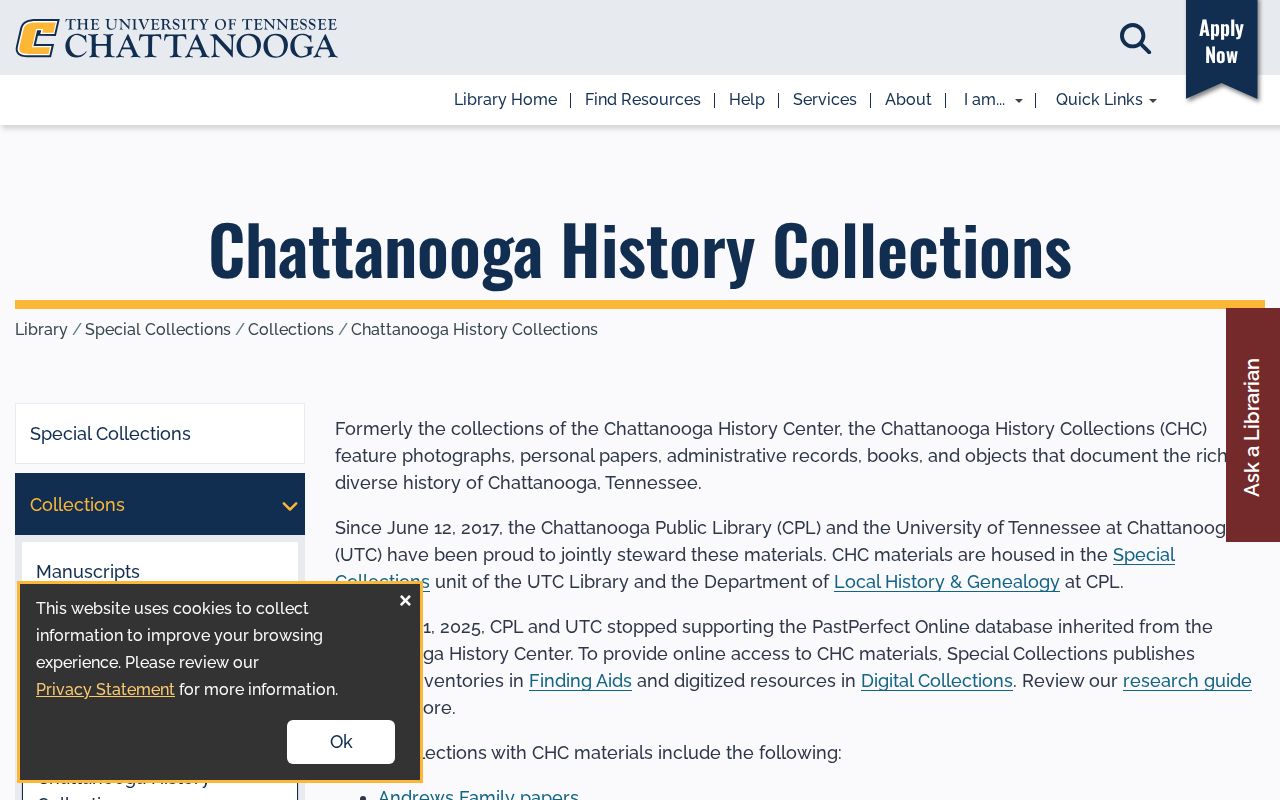
A collection identifier, narrator or creator, date, and access note keep an archival Hamilton County finding distinct from a property or directory record.
Hamilton County Past-Resident Boundaries
Keep the record role visible: an Assessor result is a property record, a Register result is a recorded-party record, a directory line is a historical listing, and an obituary index is a citation trail. None independently proves who lived at a Hamilton County address outside its own date and purpose. Respect redactions, archive conditions, and the limits on state vital records when a historical question reaches an official certificate.
Use the trail for personal, family, or house-history research. Do not use dated records to track, stalk, harass, or harm a living person. If a source conflicts, retain both citations and ask the custodian or archive about the record rather than smoothing away the conflict.
Note: Preserve the source, record date, role, original address form, and access limitation for every Hamilton County past-residents result.